Our Location
Amac, Suit 1, Wuse Zone 3 Shopping Complex, Wuse, Abuja FCT.

Amac, Suit 1, Wuse Zone 3 Shopping Complex, Wuse, Abuja FCT.
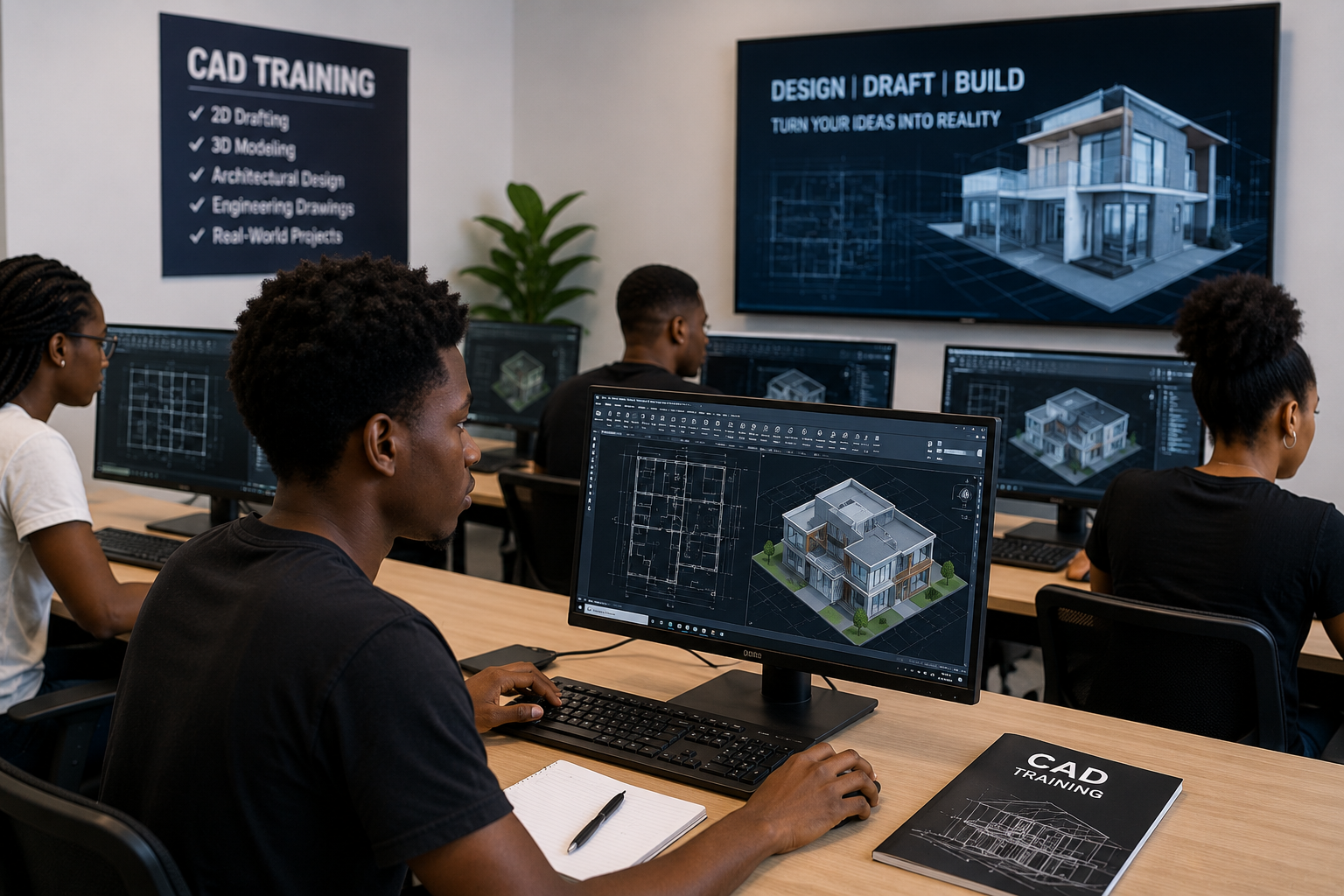
Computer-Aided Design (CAD) has transformed the way architects, engineers, designers, and construction professionals bring ideas to life. In today’s technology-driven world, CAD skills are among the most valuable technical competencies for individuals looking to build successful careers in architecture, engineering, manufacturing, and construction. CAD training provides learners with the knowledge and practical experience needed to create detailed technical drawings, 3D models, and innovative design solutions for real-world projects.
CAD is more than just drawing on a computer; it is a modern approach to design, planning, and visualization. Before the introduction of CAD software, professionals relied heavily on manual drafting methods, which required extensive time and effort. Today, CAD software enables users to create accurate designs quickly, improve collaboration, and reduce errors during project execution. Through CAD training, students learn how to use industry-standard tools to produce professional designs used in residential buildings, commercial spaces, engineering systems, and industrial products.
One of the greatest benefits of CAD training is its practical relevance across multiple industries. Architects use CAD to design buildings and structures, engineers rely on it for technical plans and system layouts, and manufacturers use CAD to develop products and prototypes. This wide range of applications makes CAD skills highly employable and valuable in today’s competitive job market. Students who complete CAD training gain technical expertise that can lead to rewarding careers in design, drafting, construction, and engineering support services.
CAD training programs are designed to help learners develop both theoretical knowledge and practical skills. Students begin by learning the fundamentals of technical drawing, measurement, and design principles before advancing to 2D drafting and 3D modeling. They are introduced to software tools commonly used in the industry, allowing them to understand how to create floor plans, elevations, structural drawings, and realistic digital models. These practical experiences help students build confidence and prepare for real-world design projects.
A major advantage of CAD training is the ability to visualize ideas before construction or production begins. Through 3D modeling and rendering, designers can create realistic representations of buildings, products, and systems. This helps clients, contractors, and stakeholders better understand project concepts and make informed decisions before implementation. By reducing design errors and improving communication, CAD plays a critical role in improving efficiency and project outcomes.
Another important aspect of CAD training is problem-solving and creativity. Students learn how to transform concepts into functional designs while considering factors such as safety, sustainability, aesthetics, and usability. They are encouraged to think critically and develop innovative solutions to design challenges. These skills are essential for professionals who want to contribute to modern infrastructure development and technological advancement.
CAD training also supports career flexibility and remote work opportunities. As businesses increasingly adopt digital workflows, skilled CAD professionals can work for companies across different regions and industries. Freelance opportunities are also available for individuals who specialize in drafting, modeling, and visualization services. With the right skills and portfolio, CAD professionals can collaborate with international clients and participate in large-scale projects from virtually anywhere.
The construction and engineering industries continue to evolve, and CAD technology remains at the center of innovation. Advanced tools now integrate Building Information Modeling (BIM), simulation technologies, and cloud collaboration features that improve project management and teamwork. By learning CAD, students position themselves to adapt to modern industry trends and remain competitive in the workforce.
CAD training is not only for professionals in architecture or engineering. Entrepreneurs, product designers, interior designers, and creative innovators can also benefit from learning CAD tools. Whether designing furniture, planning interior spaces, or developing new products, CAD software provides the flexibility to turn ideas into detailed digital models that can be refined and improved before production.
A successful CAD training program focuses on hands-on learning and project-based practice. Students gain practical experience by working on real-life design assignments and developing portfolios that demonstrate their skills and creativity. This portfolio becomes an important asset when applying for jobs, internships, or freelance opportunities. Employers value candidates who can showcase technical competence and problem-solving abilities through completed projects.
The demand for CAD professionals continues to grow globally due to rapid urbanization, infrastructure development, and technological advancement. Organizations require skilled individuals who can contribute to planning, design, and technical documentation processes. This demand creates strong career prospects for individuals trained in CAD software and digital design techniques.
Learning CAD also improves digital literacy and technical communication skills. Students become familiar with modern design tools, file management systems, and collaborative workflows used in professional environments. They learn how to communicate ideas clearly through technical drawings and visual presentations, which are essential skills in design and engineering fields.
In conclusion, CAD training is a valuable investment for anyone interested in design, construction, engineering, or digital creativity. It equips learners with practical skills, industry knowledge, and career opportunities in a rapidly evolving technological world. By mastering CAD tools and techniques, students can contribute to innovative projects, improve design efficiency, and build successful careers in high-demand industries. Whether pursuing employment, entrepreneurship, or freelance work, CAD training provides a strong foundation for professional growth and future success.